
Heat pump in freezing temperatures: When the heating element has to help heat
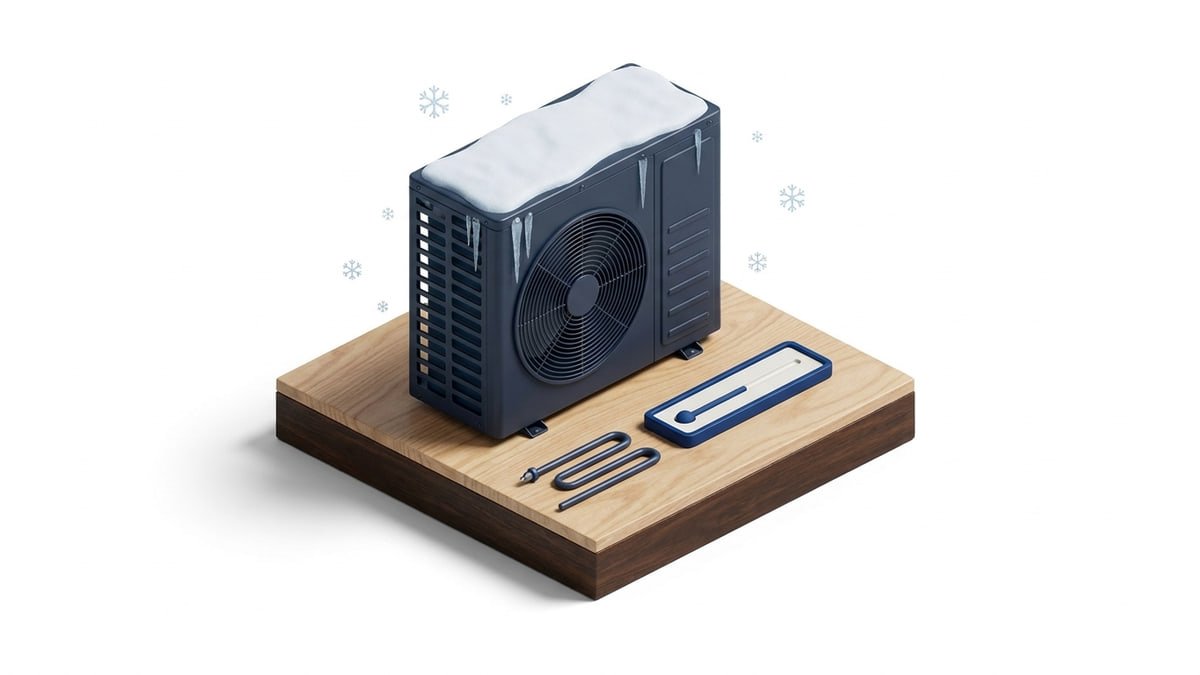
At the start of the heating season, one question keeps coming up: Can an air source heat pump handle a really cold week in January, or will the heating element end up heating with electricity anyway? The short answer: A properly planned system will also get through freezing periods. The heating element is intended as a backup and should rarely run during normal operation. If it kicks in often, this is usually due to the planning or the settings, not the technology.
Why cold weather challenges air source heat pumps
An air source heat pump gets its heat from the outdoor air. The colder it is outside, the greater the difference to the temperature of the heating water, and the more electricity the device needs for the same amount of heat. This is physics, not a defect. Due to the highly fluctuating outdoor temperatures, klimaaktiv ranks air source devices behind geothermal and groundwater systems in terms of efficiency, but explicitly calls them highly efficient heating systems that there is no argument against.
Then there is defrosting. If the temperature at the evaporator drops below zero degrees, ice builds up on the fins of the outdoor unit. The system melts it off at intervals. This requires energy and reduces efficiency slightly, but is a completely normal part of winter operation.
When the heating element kicks in
Most systems have an electric heating element as an auxiliary heater. It helps out when the heat pump alone can no longer meet the demand, for example on the coldest days or in the event of a fault. The outdoor temperature at which this happens depends on the design. The difference in consumption is important: a heating element turns one kilowatt-hour of electricity into exactly one kilowatt-hour of heat, whereas the heat pump generates a multiple of this. Every hour the heating element runs therefore means expensive heat.
That is why planning is crucial. klimaaktiv recommends calculating the heating load according to the standard (ÖNORM EN 12831 or ÖNORM H 7500) and not relying on estimates. As a rule of thumb, the same body states: A heat pump is suitable if the heating system can manage with a maximum flow temperature of 55 degrees even on the coldest day of the year. However, the device should not be too large either. According to klimaaktiv, oversized systems are more expensive to purchase and harm efficiency and service life.
How you can see if your system is running well
The key figure that matters is the seasonal performance factor (Jahresarbeitszahl – JAZ): the heat generated divided by the electricity consumed over a whole year, including freezing days and the heating element. A COP from the brochure, on the other hand, only applies to a single test point and tells you very little about January. In practice, according to klimaaktiv, seasonal performance factors between 3 and 4.5 are achievable for heating and hot water. The difference is noticeable: with a JAZ of 4 instead of 3, electricity costs for the same amount of heat drop by a quarter.
To know your JAZ, you need measured values. The klimaaktiv installation guide provides for a heat meter and a separate electricity meter for the compressor and auxiliary drives, unless the heat pump already records this itself.
What you can do specifically now
- Check the controller to see if it displays the operating hours of the heating element. If they rise significantly even during light frost, speak to your installer about the design and settings.
- Check the heating curve. A curve that is set too steeply drives the flow temperature unnecessarily high. Even a few degrees less will improve efficiency.
- Keep the outdoor unit clear. Leaves and snow should be removed, and the condensation water must be able to drain away.
- Note down meter readings, ideally at the start of each month. After a year, you will know your real JAZ.
- With a new system, insist on a standard-compliant heating load calculation and ask at what outdoor temperature the heating element should start helping.
You can estimate roughly how much electricity your heat pump will need over the year using our calculator. If you are planning a new system and want to compare quotes, our request for quotes will help you further.
AO
This article contextualises a topic that many people are currently talking about. It reflects our assessment and is not a news report. We will continue to think about the topic and update the article if anything new arises.
Sources
- klimaaktiv: So läuft Ihre Wärmepumpe rund – Tipps für die Planung und Installation (How to keep your heat pump running smoothly – tips for planning and installation, 2024) — accessed on 5 October 2026
- klimaaktiv Wegweiser zur guten Installation von Wärmepumpen (Guide to good installation of heat pumps) — accessed on 5 October 2026
We state facts in our own words and link to the source. The mentioned authority itself is always legally binding — public subsidy conditions can change at short notice.